Segregation and stowage requirements for dangerous cargo - IMDG code guideline
Handling dangerous cargo requires special care due to the inherently hazardous nature of the shipment and applicable carriage regulations. The general provisions for segregation between the various classes of hazardous goods are shown in
"Segregation table" (IMDG Code Chapter 7.2.1.16). In addition to the general provisions, there may be a need to segregate a particular substance, material, or article from other goods that could contribute to its hazard.
IMDG code & related guideline -IMDG Code means International Maritime Dangerous Goods Code . The IMDG Code regulated the transport of dangerous
goods by sea to prevent injury to persons or damage
to ships and their cargo. Transport of marine pollutants is primarily regulated to prevent
harm to the marine environment.
The objective of the IMDG Code is to enhance the safe
transport of dangerous goods while facilitating the free unrestricted movement of such
goods.
The IMDG Code contains details of all the various dangerous cargoes offered for
carriage by sea and includes solid, liquid, and gaseous substances. Explosive, flammable,
oxidizing, and radioactive materials are also included and recommended means of their
containment or packing are listed, as is all manner of other information relating to the
product. Future updating of the Code, on a two-year basis, are foreseen to take
into account technological developments.
All ships carrying dangerous cargoes should have onboard medical first-aid equipment, including oxygen resuscitation equipment and antidotes for shipment, sent in compliance with recommendations listed in I.M.O. -–MFAG (Medical First Aid Guide) and WHO — IMGS (International Medical Guide for Ships).
D/G Cargo “Onboard” List
Where required for reporting to port authorities, the C/Off shall prepare an updated
dangerous cargo list.
This list shall contain at least the following information:
a) Stow Position b) Container Number c) Line Operator
d) Port of Loading / Discharging e) DG Class f) UN Number
g) Proper Shipping Name h) Weight i) Flash Point and EMS
Such list for reporting to authorities shall be made with utmost caution.
D/G Cargo Stowage Plan
The C/Off shall prepare a copy of the Dangerous Cargo Stowage Plan
(indicating D/G class & Stowage Location), along with
a D/G Cargo List (indicating Location, Cntr No., D/G Class and UN No.).
And these along with any particular guidelines from shippers shall be kept:
- in Wheel House (for ready reference of the watchkeeping officer) and
- in Fire Wallets at Gangways.
Stowage Hold or Container (enclosed)
Before loading any Dangerous Goods into a compartment or container, it should be ascertained that the
space is suitable for that particular cargo and that it is in a good dry condition.
All Dangerous Goods should be tightly stowed and well secured against any movement, including chafe.
Securing materials used should be compatible with the goods themselves.
Drums should be stowed close and compact, bungs, or closures uppermost. Rolling hoops should not
override. Adequate soft dunnage (e.g., timber) should be laid between tierseven, in some instances, though
the drums are designed to "nest". With drums of sensitive cargo, e.g., chlorates, bromates, chlorites, and
substances in other classes such as nitrocellulose, it may be necessary to dunnage individually between
each drum.
Whenever Dangerous Goods and general cargo are stowed within the same compartment or container,
the Dangerous Goods should be stowed (where possible) for best accessibility and to facilitate inspection,
e.g. in the doorway of the container.
best seed banks that ship to Australia. BDG.
It is important to remember that the presence of even one package of Dangerous Goods in a container at
once renders that container hazardous and subject to Dangerous Goods legislation.
Particular provisions for segregation are indicated in the Dangerous Goods List and, in the case of conflicting provisions, always take precedence over the general provisions.
For example:
a) In the Dangerous Goods List entry for ACETYLENE, DISSOLVED, class 2.1, UN 1001, the following particular segregation requirement is specified:
“separated from” chlorine
b) In the Dangerous Goods List entry for BARIUM CYANIDE, CLASS 6.1, UN 1565, THE FOLLOWING PARTICULAR SEGREGATION IS SPECIFIED:
“separated from” acids
( IMDG Code Chapter 7.2.1.6 )
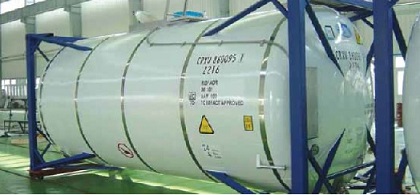
Tank container with DG cargo
2. Where the Code indicates a single secondary hazard (one subsidiary risk label), the segregation provisions applicable to that hazard should take precedence where they are more stringent than those of the primary hazard.
( IMDG Code Chapter 7.2.1.6.1 )
3. Except for class 1, the segregation provisions for substances, materials or articles having more than two hazards (2 or more subsidiary risk labels) are given in the Dangerous Goods List.
For example:
In the Dangerous Goods List entry for BROMINE CHLORIDE, class 2.3 UN 2901, subsidiary risk 5.1 and 8, the following particular segregation is specified:
"segregation as for class 5.1 but "separated from "class 7"
* (IMDG Code Chapter 7.2.1.6.2 )
4. Whenever dangerous goods are stowed together, whether or not in a cargo transport unit, the segregation of such dangerous goods from others should always be following the most stringent provisions for any of the dangerous goods concerned.
(IMDG Code Chapter 7.2.1.9 )
5. No segregation need be applied between dangerous goods of different classes which comprise the same substance but vary only in their water content, such as sodium sulfide in classes 4.2 and 8, or for class 7 if the difference is due to quantity only.
(IMDG Code Chapter 7.2.1.13)
6. Notwithstanding IMDG Code Chapter 7.2.1.6.1, 7.2.1.6.2 and 7.2.1.13, substances of the same class may be stowed together without regard to segregation required by secondary hazards (subsidiary risk label(s)), provided the substances do not react dangerously with each other and cause:
.1 combustion and/or evolution of considerable heat;
.2 evolution of flammable, toxic or asphyxiant gases;
.3 the formation of corrosive substances; or
.4 the formation of unstable substances.
(IMDG Code Chapter 7.2.1.11)
Remark: As a general rule to carry these substances in same cargo transport unit, this regulation should not be applied priority over Chapter 7.2.1.6.1, 7.2.1.6.2 and 7.2.1.13 without surveyor's clarified assess that there is not the above danger due to mixing these substances.
7. Dangerous goods which have to be segregated from each other should not be carried in the same cargo transport unit. However, dangerous goods that should be segregated "away from" each other may be carried in the same cargo transport unit with the authority's approval. In such cases, an equivalent standard of safety must be maintained.
(IMDG Code Chapter 7.2.2.3)
8. For the purpose of segregation, dangerous goods having certain similar chemical properties have been grouped together in segregation groups as listed in 7.2.1.7.2. The entries allocated to these segregation groups are listed in IMDG Code chapter 3.1.4.4. Where in the Dangerous Goods List entry in column 16 (stowage and segregation) a particular segregation requirement refers to a group of substances, such as "acids", the particular segregation requirement applies to the goods allocated to the respective segregation group.
(IMDG Code Chapter 7.2.1.7.1.)
*Segregation groups referred to in the Dangerous Goods List* (IMDG Code Chapter 7.2.1.7.2.)
.1 acids
.2 ammonium compounds
.3 bromates
.4 chlorates
.5 chlorites
.6 cyanides
.7 heavy metals and their salts
.8 hypochlorites
.9 lead and lead compounds
.10 liquid halogenated hydrocarbons
.11 mercury and mercury compounds
.12 nitrites
.13 perchlorates
.14 permanganates
.15 powdered metals
.16 peroxides
.17 azides
.18 alkalis
9. It is recognized that not all substances falling within a segregation group are listed in this Code by name. These substances are shipped under N.O.S. entries. Although these N.O.S. entries are not listed themselves in the above groups, the shipper shall decide whether allocation under the segregation group is appropriate. Mixtures, solutions or preparations containing substances falling within a segregation group and shipped under a N.O.S. entry are also considered to fall within that segregation group.
(IMDG Code Chapter 7.2.1.7.3.)
10. The segregation groups in this Code do not cover substances that fall outside the classification criteria of this Code. It is recognized that some non-hazardous substances have similar chemical properties as substances listed in the segregation groups. A shipper or the person responsible for packing the goods into a cargo transport unit who does know about the chemical properties of such non-dangerous goods may voluntarily decide to implement the segregation requirements of a related segregation group.
(IMDG Code Chapter 7.2.1.7.4.)
Procedures and guidelines for dangerous cargo documentation
Documents relating to dangerous (DG) cargo on board are subject to scrutiny by port officials, PSC inspectors and other concerned parties. Thus any irregularities in such documentation may result in fines, detention or other such serious implications for the vessel. ....
Procedures and guidelines for dangerous cargo handling
Every dangerous cargo shipment shall be made in line with IMO policy and be accompanied by required documentation. D.G. cargo with restricted/prohibited U.N. numbers shall not be accepted for shipment unless under special circumstances express permission is obtained from the company.
....
Handling of Harmful Packaged goods
Annex III Marpol 73/78 (Harmful Substances carried at Sea in Packaged Form : This Annex came into force internationally on 1July 1992. It contains regulations which include requirements on packaging, marking, labelling, documentation, stowage and quantity limitations....
Related articles
Containership operation : Cargo Securing
There are six degrees of motion at sea that a ship may have to encounter in a voyage. However, pitching, heaving, and rolling are three major forces that impact most on a containership's lashing arrangement. Lateral rolling motion factors the greatest challenge for piles of containers. If containers are to be carried safely on the deck of a container vessel, they must be tightly connected to the ship. It is done with the aid of devices known as twist locks.
.....
Containership operation : Common reasons for stowfall
Container stows often fail due to container stacks being too heavy and too high overall, exposing the lower containers to excessive transverse racking and compressive forces due to the tipping effect. Such an anomaly may occur if the ship is unable to calculate the forces acting on stow with precision. The Cargo/Container Securing Manual is limited in this respect as the examples of container weight distributions shown may not cover all permutations and eventualities. Software programs have the advantage of taking into account all known variables........
Containership operation: Cargo hold ventilation
Cargo holds ventilation onboard a containership is very important as it minimizes the risk of harm or damage to cargo. A proper ventilation system assures the quality of the transported goods by preventing the formation of condensation in cargo spaces, reducing the harmful heating of the shipment, and removing potential hazardous gases from cargo spaces........
Containership operation: Safety of personnel
In port stevedores board the vessel for lashing, unlashing and cargo operations and their safety whilst on board is the vessels responsibility. It is important to understand that any injury caused to stevedores or shore personnel due to a condition on board being unsafe, can result in very large claims to the vessel.
.....
Containership operation: wet damage in cargo hold
When water entered into a ship's cargo, hold it may cause wet damage to the cargo inside containers especially to those stowed on the bottom stack, unless the bilge water is drained in a proper and swift manner. The regular sounding of bilge well or monitoring bilge alarm must be one of the very important or rather essential routine jobs on board. However, this job requires special attention on board. All bilge alarm need to be tested regularly......
Reefer cargo care at sea
Unlike permanent cold stores or refrigerated ships, where robust equipment is under constant care by qualified personnel, the ISO refrigerated container may travel by several different modes and be in the care of many and varied people. Before being despatched to load refrigerated cargo (usually at shippers' premises), the container and its machinery should be subjected to a rigorous examination.......
Containership cargo stowage and planning
Master and officers of all vessels require a good working knowledge of the various kinds of cargo they are likely to carry their peculiar characteristics, liability to damage, decay, or deterioration, their measurement, and the usual methods of packing, loading and discharging, stowage, dunnage, etc., as the Master is responsible for the safe loading of his vessel and the proper storage of the cargo......
Stacking Weights Restrictions
rior loading cargo, stacking weights of containers must be checked against the allowable stack weights on board the vessel both on deck and under deck. Neglecting above may cause serious damage to ships structure, hull and eventually overall stabilty of ship may get affected. Maximum allowable stack weights of Tank tops, Hatch covers and Decks shall not be exceeded at any time......
Lashing strength calculation
Lashing strength of deck cargo shall be ascertained by using the appropriate lashing strength calculation software where provided. All resulting values for lashing strength must be within the tolerance limits prescribed by the vessels classification society......
Dangerous goods stowage and segregation
Clear guidelines apply to the stowage and segregation of Dangerous Goods and in some cases may require particular commodities to be carried in completely separate holds. The interaction of two cargoes will not occur if the packaging of that cargo remains intact. However, the Master must always consider the possible effect should the cargo escape for any reason and should not restrict his consideration to those cargoes which are listed in the IMDG Code......
Reefer Container Stowage
Reefer containers proposed for stowage must be accompanied by a reefer manifest. This reefer manifest should contain Container No., Stow position, Commodity, Temperature, and Ventilation status......
Out of Gauge Container Stowage
It is essential that, during out of gauge cargo operations, a careful watch is kept for any damage caused to the vessel, her equipment, or to containers. Notice of any damage must be immediately brought to the attention of the Stevedore's representative, the Port Captain/Supercargo and Charterers Agent. Damage reports must be completed in all cases giving the full and comprehensive details of damage caused......
Special Container Stowage
After receiving stowage plan ships, Chief Officer must ensure that all Deck Officers are aware of any specialized containers due to be worked, such as reefers, vents, over-heights, over-widths, flat racks, etc. and their unique requirements.....
20 or 40 or 45 feet Compulsory Stowage Locations
Most cargo securing manual provide a guideline for different container types. These stow positions of 20 feet,40 feet, or 45 feet are also incorporated in a ship-specific stowage planning software and highlight errors if any violations occur......
Irregular Stowage of Containers
The Terminal Planner shall present the pre-loading plan to the Chief Officer to obtain his approval/comments. The Chief Officer, in turn, enters the cargo data in the loading computer and must ensure that the required criteria, concerning stack weights, trim/stability/stresses/ visibility limitations, DG cargo segregation, and specialized container requirements, are met. He should allow the bunker/freshwater consumption during the voyage and all possibilities of ballasting / deballasting. The completed loading plan must be presented to the ship's Master for approval.....
Over-stow of Containers
With a closed roof, the hardtop the container offers the same reliable protection as provided by a standard box. Hardtop containers have more lashing points than other container types. This guaran- tees reliable and convenient securing of cargo.
.....
Other matters regarding cargo stowage as necessary
Bulk products carried in a closed container might include malt, grain, seed, polythene granules, chemically inert powders, brake fluid, detergent, fruit juice, wine, non-hazardous oils, sodium silicate, fatty acids and maple syrup amongst many others......
ShipsBusiness.com is merely an informational site about various aspects of ships operation,maintenance procedure,
prevention of pollution and many safety guideline. The procedures explained here are only indicative,
not exhaustive in nature and one must always be guided by practices of good seamanship. Site Use and Privacy - Read our privacy policy and site use information.
//Home //Terms and conditions of use