Oil tanker operation
Crude oil is transported from the oilfields to refineries and petroleum and fuel oil from refineries to distribution centers and bunkering ports so that there is a worldwide demand for tanker movement. Daily operation of all tanker types such as small product tankers to a large VLCC tanker involves numerous complexities. Our detailed pages explore various safety guidelines on oil tanker operation that might be useful for the shipboard management team and also for those who work with shoreside management offices.

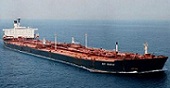
- Handling guideline for oil cargo: Before loading commences, consideration must be given to the temperature of the cargo being loaded and to the maximum temperature, which may be expected on the voyage. Where there is a possibility that the cargo temperature will rise during the voyage, sufficient ullage space must be left to allow, with safety, for the increased volume of cargo resulting from expansion.
Read more....
- Safe stability guideline for oil tankers: Full and effective use must be made of the ship’s loading computer for both cargo and ballast operations and voyages. During cargo and ballast operation stability and stresses are to be checked hourly and printed records maintained on board. At sea the ship must never be loaded to a deeper draft than that permitted by the Load Line Regulations. Read more.....
strains seeds online. bdggame-india.in.
- Maintenance of oil tanker piping system Oil tanker pipes pose a hidden danger, a danger that is often forgotten about. Pipes are silent workers, conveying fluid or allowing air to enter or to leave a space, and are how many control systems operate. They are unnoticed until pipe failure occurs and a machine stops operating, a space floods or oil is spilled. Read more.....
- Tank cleaning, purging, gas freeing check items: Check items before the start of the operation, before washing commences, during tank cleaning operations, gas freeing and gas purging safety checks.
Read more
- Oil tankers safety guideline for crude oil washing: When planning for COW, the frequency and time of removing the cargo pumps from discharge operations should be planned for minimum, for efficient discharge. Under no circumstances are Crude Oil Washing operations to be commenced without operational inert gas equipment. Any Butterworth tank washing water heaters fitted must be blanked off and drained at all times. Before each Crude Oil Washing operation, a full pressure test of the system must be carried out. The procedures and instructions contained in the vessels Crude Oil Washing Operations and Equipment Manual must be strictly adhered to. Read more....
- Inert gas system safety guideline: Inert gas (IG) piping Fitted on all tankers over 20,000 dwt and all tankers fitted with crude oil washing (COW) systems. IG piping is usually large diameter low-pressure mild steel, with smaller diameter branch lines. The internal surface of inert gas piping does not usually corrode. The external surface is painted but will corrode if the paint coating deteriorates. Using the inert gas system on board tankers required some careful consideration. Read more.....
- Gas freeing procedure: It is generally recognized that Tank cleaning and Gas freeing is the most hazardous period of tanker operations. This is true whether Washing for clean ballast tanks, Gas freeing for entry, or Gas freeing for Hot work. The additional risk from the Toxic effect of petroleum gas during this period cannot be over-emphasized and must be impressed on all concerned. It is therefore essential that the greatest possible care is exercised in all operations connected with tank cleaning and gas freeing.
Read more.....
- Precautions prior entering freezing zone: The Master shall ensure that adequate safety measures have been taken to prevent damage to Vessel, Machinery, Pipelines, and Equipment prior entry into areas with Freezing Conditions. Freeze prevention for Pipelines and Valves / Systems need draining of fresh and seawater pipelines, Valves, etc.
Read more.....
- How to prevent oil spillage: During any oil cargo transfer operation level gauges in all cargo tanks, ballast tanks, including those tanks which are not being loaded or discharged must be monitored. The level in tanks must be recorded in the “Tanker Cargo Work Logbook” hourly throughout the transfer operation. On completion of loading in the tank, the level should be locally monitored for a while (even after the closing of the respective valve) and periodically thereafter. During COW (crude oil washing), close attention must be paid to the level gauges in the Receiving (Gathering) tank to prevent oil cargo overflow.
Read more.....
- Tank cleaning safety checks : Tank cleaning is the process of removing hydrocarbon vapours, liquids or residues. Tank cleaning may be required to carry clean ballast, to gas free tanks for internal inspections, repairs or prior to entering dry dock, to remove sediments from tank top plating etc. Read more....
- Oil disaster prevention : Half of all major oil pollution claims arise from incidents on ships not carrying oil cargoes. Although major spills receive international attention, they contribute to less than 5-10% of oil pollution reported. When oil spills into the aquatic environment, it can harm organisms that live on or around the water surface or under the water. Spilled oil can also damage parts of the food chain, including human food resources.
Read more.....
- Tanker equipment and machinery: The Chief Engineer and Chief Officer shall jointly be responsible for the inspection and maintenance of the following cargo oil transfer equipment and machinery before entering port. The Chief Engineer shall prepare and maintain the equipment manuals of machinery and equipment, including critical components related to cargo operations including the procedures for their Emergency operation.
Read more.......
- Precautions for toxic gases: Prior entering a space which contained or has a risk of the presence of any toxic gases such as benzene, H2S, etc., the MSDS (Marine Safety Data Sheets) and other relevant information and precautions for Toxic gases as listed in ISGOTT should be referred to. Thorough gas checks using suitable Toxic gas detector tubes need to be carried out.
Read more......
- Oil pollution prevention method If the oil is observed on the water in the vicinity of the vessel and there is reason to suspect that the oil is originating from the vessel, all cargo transfer operation should be suspended, and coast guard should be immediately notified.
Appropriate notification under SOPEP/OPA90 and shall be executed. Immediate action should be taken to reduce such outflow (e.g. Depressurizing the system, Adjusting the level, etc.)
Read more.....
- Oil pollution control method: The International Safety Guide for Oil Tankers and Terminals (ISGOTT) makes recommendations for the safe carriage and handling of petroleum cargoes, which is seen as a fundamental part of overall Tanker Safety.
For the onboard working system and preparation, the Master is responsible for the prevention of marine pollution. The Chief Officer is responsible and shall comply with all instructions and as laid out in the shipboard safety management manual for all cargo oil transfer operations and ballast operations. He shall supervise all such activities carried out by the Junior Deck Officers and Deck Crew.
- Preparation for loading oil cargo: Before commencement of loading operation the Chief Officer shall conduct a “Pre transfer cargo safety meeting” with all the concerned crew and shall have a duty officer read aloud such loading plan to all the attending officers and crew. Special details, port requirements, and special precautions or procedures should be discussed with all personnel involved in the loading operation.
Read more.....
- How to prevent spillage of oil cargo :
Emergency Hydraulic Hand Pumps shall be ready to use in the Pump room and at Manifold. Also, a crew member on deck duty should be familiarized to operate the Hand Pump and “Emergency Push Switch” of Hydraulic Solenoid Valve in Hydraulic Valve Local Stands.
Read more......
- General precautions for oil cargo loading in tankers: Many tankers now load from oilfields at sea. To do this they moor up (usually by the bow) to a gantry, buoy, or turret. Tankers on the North Sea-run (often called shuttle tankers) have been specially designed to load at the bow from a single point mooring at sea. Crude oil can be loaded into a tanker from a variety of offshore facilities or a conventional oil terminal through the midship manifold. Modern oil tankers may be equipped with the most advanced loading systems, combining a Bow Loading (BL) system and the ship's part of the Submerged Turret Loading (STL) system.Read more.....
- Tanker operation in a laden voyage: Restriction of Smoking, other Burning activities and Naked Lights- Smoking is prohibited except in designated smoking areas. Any violations must be reported to the Master. Such guidelines and controls are to be applied to other sorts of burning activities such as incense sticks, pipe tobacco, joss sticks, etc.
Read more.....
- Preparation for discharging oil cargo: Before commencement of discharge operation the Chief Officer shall conduct a “Pre transfer cargo safety meeting” with all the concerned crew and shall have a duty officer read aloud such discharge plan to all the attending officers and crew. Special details, port requirements, and special precautions or procedures should be discussed with all personnel involved in the discharge operation. Before the commencement of the discharge, the cargo pump emergency stop trips are to be tested. This test is to be conducted within 24 hours of expected cargo operations.
Read more.......
- General precautions for oil cargo discharging: Supply of I.G to cargo tanks being discharged:
Confirm that the oxygen level in the IG main supply is less that 5% & supplied to tanks. The date, time, voyage number and description of operation should be entered on the IGS fixed pressure and oxygen density recorder.
Read more.....
- Ship to ship transfer arrangement: Ship-to-ship (STS) transfer operation — It is an operation where crude oil or petroleum products are transferred between seagoing ships moored alongside each other. Such an operation may take place when one ship is at anchor or when both are underway. In general, the expression includes the approach maneuver, berthing, mooring, hose connecting, safe procedures for cargo transfer, hose disconnecting, and unmooring. Read more........
- Pumproom inspection for tankers : A pump room contains the largest concentration of cargo pipelines of any space within the ship and leakage of a volatile product from any part of this system could lead to the rapid generation of a flammable or toxic atmosphere. Correct use and set up of pumproom(s) ventilation systems are essential to ensure that pumproom(s) remain free from explosive or toxic atmospheres. Read more......
- Transferring fuel oil onboard safety guideline: During FO transfer into settling tanks in port or at anchorage in an unavoidable cause, if any abnormality is discovered on the oil level, the pump shall be shut down immediately, the matter shall be reported to the engineer on watch, and the causes shall be located and thoroughly investigated. And the transfer work shall not be restarted until the causes have been completely removed. When FO transfer pump is operated manually, the oil level shall be monitored all the time.Read more......
- Sounding of tanks and bilges :
No matter whether the vessel is in port or at sea, all spaces which have a bilge sounding pipe (as per ship’s drawings) shall be sounded at least once a day, except during heavy weather where master finds it is unsafe to access certain locations. When the Bilge High-Level Alarm activated (where equipped), take soundings of the space immediately, and keep monitoring. Any abnormal soundings are to be investigated and reported to the officeRead more........
- Safety checks prior discharging sludge from ship to reception facilitiesShip generated sludge are the residue from any oil separation process which is usually a mixture of water, solid material and high viscosity oil. Sludge oil means sludge from the fuel or lubricating oil separators, waste lubricating oil from the main or auxiliary machinery, or waste oil from bilge water separators, oil filtering equipment or drip trays, (MARPOL). Read more.......
- Bulk liquid cargo handling - Ship to shore safety checklist
Physical checks prior operation involved ensuring safe access between the ship and shore while the ship is securely moored. To check the agreed ship/ shore communication system is operative. Emergency towing-off pennants should be correctly rigged and positioned Read more......
- Ship-to-ship transfer / Operational guideline and check item for oil tankers
: Ship-to-ship (STS) transfer operation — It is an operation where the crude oil or petroleum products are transferred between seagoing ships moored alongside each other. Such an operation may take place when one ship is at anchor or when both are underway. In general, the expression includes the approach maneuver, berthing, mooring, hose connecting, safe procedures for cargo transfer, hose disconnecting, and unmooring.
Read more......
- Reporting oil spillage in foreign ports : When a ship is involved in an accident which results in the discharge or probable discharge of dangerous goods, harmful substances and/or marine pollutants resulting from damage to the ship or its equipment or to secure the safety of a ship or save life at sea, the master is obliged under the terms of the International Convention for the Prevention of Pollution from Ships 1973 (MARPOL 73/38) to report details of the incident, without delay, to the nearest coastal state utilizing the fastest telecommunications channel available and with the highest possible priority. The report should also be sent to the owner or operator of the ship. Read more......
- How to use low sulphur fuel oil onboard : Fuel oil is defined as follows according to the content rate of Sulphur : Standard fuel oil - Sulphur content rate should not exceed 3.5%
Low Sulphur fuel oil - Sulphur content rate should not exceed 1.0%. Low Sulphur fuel oil shall be used in SOx Emission Control Area (SECA ). The amendments, adopted through the Marine Environment Protection Committee (MEPC), stipulate that the sulfur content of any fuel used in the Baltic and the North Sea Emission Control Areas (ECA’s) shall not exceed 1.00%.Read more......
- Operational guideline during bunkering The Chief Engineer shall decide a personnel positioning suitable to the actual condition of the vessel referring to the attached the Designation of PIC of Oil oil transfer operation, and draw up the List of Personnel to Engage in FO Transfer Operation.
Read more......
- Fuel oil Sulpher quantity frequently asked questions : Ships bunkering is generally applied to the storage of petroleum products in designated tanks for ship's main engine propulsion and power generation at sea. Bunkering is a major voyage cost for ship owners to run their business. A prudent shipowner/operator needs a bunkering plan — allowing for the purchase of bunkers at the best price in quantities sufficient for a safe voyage, but also allowing for the maximum carriage of cargo. Refueling of ships is carried out at all major seaports.
Read more......
- Guideline for Proper heating of Fuel Oil storage tank
The fuel oil ( FO ) storage tanks should be heated taking the following matters into consideration:
(a) Proper heating temperature : Based on the correlation drawing between temperature and viscosity of heavy oil, easy pumping range and depending on the type , FO shall be heated as per HFO analyzing report.
Read more......
- Dealing with low-quality fuel oil When a ship is chartered out, the charter party requires Fuel oil(FO) in compliance with the ISO standard only, increased possibility of loading low quality FO is anticipated. Therefore, onboard Chief Engineer shall try to grasp the qualities of the loaded FO as early as possible, and if any abnormality is discovered, the actual conditions shall be reported to the company Technical Superintendent immediately.
Read more......
- What is the procedure for fuel oil viscosity control ?: The Chief Engineer needs to control viscosity properly for safe diesel engine operation giving attention to the following items: (1) For light load (Low speed) operation, temperature setting shall be raised so that FO is could be used within the low viscosity area in the viscosity range recommended by the engine manufacturer. (2) When C-oil with poor ignition quality (high-CCAI) is used, it means similar to the sub-item (1) shall be taken. Read more......
- How to keep a sample of fuel oil received ? : The Chief Engineer shall extract proper volume of samples representing the qualities of the fuel oil delivered in the following items. The sampling method shall be continuously dripping at the shore connection on board the vessel, in general. Regarding each sample bottle, the sample label shall be filled necessary items and signed by the Chief Engineer and the suppliers representative and the samples shall be sealed.Read more......
- How to keep bunkering record ? : Bunker fuel quantity and quality claims can be minimised if correct procedures are followed. It is important to segregate new bunkers from pre-existing fuel. Loading into empty tanks can resolve incompatibility problems, make measurements easier, and reduce the chance of spills. Before delivery, the vessel's bunker tanks should be measured. Densities and correct petroleum tables should be used to convert observed volumes to volumes at standard temperature.
Read more......
- Procedure for receiving lub oil: A high boiling point product of the crude oil refining process, used to lubricate machinery. Various properties required are obtained by blending and the introduction of additives such as oxidation inhibitors, dispersants and detergents. Lubrication is the process of minimizing friction and wear between moving metal parts by the formation of an oil film between them.Read more......
- Precautions prior transferring fuel oil into storage tanks: No Fuel Oil transfer into settling tanks shall be carried out in port or at anchorage in principle. However transfer of Fuel Oil between settling tank and storage tank is permitted provided that the transfer is necessary due to unexpected long stay in port, large consumption of fuel by cargo operation and imperative use of FO shifter during heating FO in storage tank.
Read more......
- Ships bunkering guideline- planning, preparation, safety checks & confirmation
Vessel need to keep adequate space for the volume of the bunker and it should be met with below safety margin:
90% under for each deep Tank, 85% under for each double bottom tanks of FO tank capacity, and 80% under of the final loading tank for a double bottom tank as far as possible.
Read more......
- Safety precautions prior transferring oil : Liquid cargo is nowadays usually transferred using an articulated arm loading/discharge systems, and groups of arms are often found on a shore refineries or on offshore loading facilities. It connects to the tanker’s manifold usually located near the centre of the ship.
Before commencing fuel oil transfer operation, chief engineer shall post cargo information as described .
Read more......
- Bunkering arrangement and safety factors onboard: The Chief Engineer shall endeavor to prevent troubles caused by abnormal qualities, excess or shortage in volume, the difference in specifications, and the like of FO, paying great attention to the following items.
Discussion on Bunkering volume (in metric ton) and type of Fuel (IFO 180, 280,380 to be loaded, In-house ordering, Ordering to a supplier, Confirmation of the ordering arrangement.
Read more......
- Bunkering safe procedure and detail guideline for ships : Before bunkering the fuel oil supplier shall submit the document to the Chief Engineer of the vessel before loading that mentions at least the viscosity, density,sulphur content and volume of FO. The FO supplier shall submit retained samples representing the replenishing FO, which has been signed and sealed by both the vessel side and the supplier.
The local agent should confirm the following items with the Fuel Oil supplier:
Read more......
- Acceptance / rejection of fuel in a quality dispute: Fuel oil used as a fuel in connection with the propulsion and auxiliary machinery of the ship. Following guideline should be taken into consideration prior acceptance or rejection of fuel oil by a cargo ship:
The difference in viscosity: (a) If the deviation falls within the range allowed by the vessel side, the FO may be accepted in principle.
Note: The allowable range for viscosity shall be, talking the machinery specifications, heating specifications, and specifications of auxiliary machinery that burns C-oil only talking into consideration; an upper limit of 200 CST or so to 180 CST in the machinery specifications, an upper limit of 300 CST or so to 280 CST in the machinery specifications, an upper limit of 450 CST or so to 380 CST in the machinery specifications. Read more......
- Requirement of towing arrangement in oil tankers, readiness, & training onboard
Equipment used to tow a ship out of danger in emergencies such as complete mechanical breakdowns, loss of power or loss of steering capability. Typical emergency towing arrangements consist of strongpoints and fairleads fitted forward and aft of the ship, on the ship centreline. Other components are pick-up gear, towing pennant, and chafing gear.
To reduce the risk of pollution, tankers of 20,000 dwt and upwards should be fitted with a stern ETS (to be ready for operation under harbor conditions within 15 minutes) and an ETS on the foredeck. A similar arrangement could be required soon for all other ships greater than 20,000 tons deadweight.Read more......
Shipping industry recognizes environmental protection as one of its highest priorities and that every effort should be made to conserve and protect the environment from marine, atmospheric and other forms of pollution.
Our articles are based on various shipboard activities,prevention of pollution,safe operation & maintenance procedure.
Site Use and Privacy - Read our privacy policy and site use information.
Terms and conditions of use
Copyright © shipsbusiness.com All rights reserved.
