Home ||
Tanker Safety ||
Container Ship Handling ||
Commercial Management ||
EMS
Tanker operation : Measures For Pump room entry
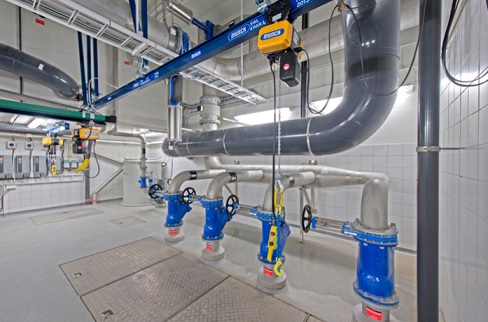
A pump room onboard an oil tanker contains the largest concentration of cargo pipelines of any space within the ship and leakage of a volatile product from any part of this system could lead to the rapid generation of a flammable or toxic atmosphere.The operation of a pump room thus involved numerous hazards. Prior entering in a pump room following basic preparation should be taken into account.
- Entry Permit into Enclosed Space :
Whenever entering the pump room, “Procedures for Entry into Enclosed Spaces”
must be complied with and the Master’s permission must be obtained, “Enclosed Space Entry Permit”
The ventilation fans shall be kept running in exhaust mode for the entire duration of validity of the permit. However, the designated responsible person (duty officer or chief officer) shall monitor such pump room entries.
- Entry Control :
All entries into the pump room shall be recorded, with the below ‘Notice’ confirmations.
They shall include the names / ranks of persons and times of entry and exit.
Such record shall be with the duty officer manning the Cargo Control Room (during operations) or on the Navigational Bridge (during Navigation)
- Atmosphere Control:
Prior to pump room entry the space must be tested for Oxygen (at least 21%), Explosive gases (HC LEL= less than 1% LEL) and Toxic vapors (Nil).
The ventilation fans shall not be stopped until all personnel have left the pump room.
- Effective communication :
Regular communication checks should be made at pre-agreed intervals and failure to respond should be a cause to raise the alarm.
- Gas Monitoring :
At times where cargo movement within the pipelines is expected or regular personnel entry for routine inspections are expected, then such portable gas measuring instruments shall be kept in a state of readiness at the entrance of pump room, with detecting hose leading to the bottom floor.
However, only if a fixed gas detection system is fitted, is correctly calibrated and tested regularly and can provide % LEL readings to a level of accuracy equivalent to portable gas instruments at representative locations, then such fixed equipment can be used to provide and continuously monitor the safe entry within the pump room. Ventilation fans must be started prior to switching on the pump room lighting. Only approved lighting shall be used in the pump room and shall be maintained in proper condition. Steel drums containing equipment and clean rags must be stowed over suitable wooden dunnage to prevent formation of sparks. All storage drums must be provided with suitable lids.
Hydrocarbon Monitoring:
When spaces are automatically monitored for hydrocarbon gas then no manual monitoring is required provided that the automatic equipment is operational and properly calibrated.
Spaces adjacent to cargo compartments are to be manually monitored for hydrocarbon gas within 12 hours after loading flammable cargo and thereafter on a regular basis and records maintained in the Deck Log Book.
Pumprooms are to be manually monitored at least weekly on voyage for hydrocarbon gas and in addition any applicable toxic vapour and records maintained in the Deck Log Book. During Cargo operations, the pumprooms are to be monitored at least hourly for hydrocarbon and toxic vapours, with the readings recorded in the Cargo Time Book.
- Keep clean / clear in Pump Room:
The pump room shall be visually inspected for oil and trash (rags) regularly.
Pump room bilges should be kept and maintained clean and dry. Any oil and trash discovered in the pump room bilges must be removed and disposed correctly, as soon as practicable and possible.
Storage of oil / substances in pump room likely to spontaneously ignite or emanate vapors should be avoided.
Maintenance Work in Pump Room
During maintenance work in the pump room including pumps, valves, strainers, etc., strict attention must be paid to the possible presence or development of flammable or toxic vapors. Rescue equipment should be maintained and kept in a state of readiness.
Notice to be posted outside Pump Room as follows: “No entry without prior permission”
Prior entry, ensure:
- i. Ventilation exhaust is running
- ii. Proper Lighting / illumination
- iii. Personal Gas Meter
- iv. Communication link with duty officer
- v. Atmosphere checks (Oxygen-21%, HC gas-Nil, Toxic gases-Nil)
- A multi-gas personnel detector should be carried while being in Pump Room.
Any warning from such unit indicates to evacuate immediately.
Related articles:
reliable seed banks. BDG.
Safety precaution during oil handling operations
Oil pollution prevention method
General precautions for tankers
Tanker equipment and machinery
General guidance for oil tankers
Crude oil washing for tankers
аренда кофемашины Новасимунелли Appia, соц.
Oil tanker handling more opeartional guideline
Oil pollution control method
Gas freeing arrangement for oil tanker
Handling guideline for oil cargo
Oil pollution prevention method
Preparation for loading oil cargo
How to prevent spillage of oil cargo
General precautions for oil cargo loading in tankers
General precautions for tankers
General guidances for tank cleaning
General precautions for ballasting procedure
Tanker operation in a laden voyage
Preparation for discharging oil cargo
General precautions for oil cargo discharging
How to ensure safe working area onboard oil tankers
Shipping industry recognizes environmental protection as one of its highest priorities and that every effort should be made to conserve and protect the environment from marine, atmospheric and other forms of pollution.
Our articles are based on various shipboard activities,prevention of pollution,safe operation & maintenance procedure.
Site Use and Privacy - Read our privacy policy and site use information.
Terms and conditions of use
Copyright © shipsbusiness.com All rights reserved.