Any misuse of fuel oil can lead to significant claims and jeopardize the safety of
the ship. This article aims to provide masters, ships’ officers, and shore
superintendents with a basic understanding of the use of, and precautions when using fuel oils on board ship. The International Safety Guide for Oil Tankers and Terminals (ISGOTT) makes recommendations for the safe carriage and handling of petroleum cargo, which is seen as a fundamental part of overall Tanker Safety.
Working system and preparation :
The Master is responsible for the prevention of marine pollution.
The Chief Officer is responsible and shall comply with all instructions and laid out herein for all cargo oil transfer operations and ballast operations. He shall supervise all such activities carried out by the Junior Deck Officers and Deck Crew.
Planning for Cargo Oil Operations
Before commencement of any cargo oil operation, the Chief Officer shall prepare a detailed plan & the same to be approved by Master.
The Cargo oil operations plan shall be prepared in writing and posted conspicuously in the Cargo Control Room. It shall be made available to all officers and crew directly involved in the cargo oil transfer operations.
The plan shall include at least the following operations:
- Loading, Discharging and Transfer of cargo oil,
- Crude Oil Washing,
- Tank cleaning, Purging and / or Gas-freeing,
- Ballasting and De-ballasting,
- Decanting of the slop tank, and
- Delivery of Slops, Sludge and Cargo Residues to shore facility.
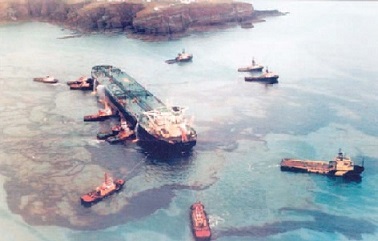
oil pollution at sea
Pre-safety meeting
The Chief Officer shall conduct a “Pre cargo operation safety meeting” with all concerned.
The plan shall be read out to the attending crew the duty officers involved to ensure good understanding by all such personnel,
The following shall be addressed, as a minimum:
- Special features and characteristics of the cargo, addressing any precautions to be observed. i.e., high H2S content, high viscosity, high vapor pressure, initial monitoring of loaded heated cargo temperatures, etc.
- Procedures and arrangements for starting and stopping loading or discharging operations, crude oil washing, and ballast operations.
- Communication between the cargo control room, pump room, and on-deck.
- Monitoring requirements for the Maximum Allowable Loading Rates, topping off rates / Discharging Rates (grade-wise)
- Monitoring and maintaining the maximum allowable manifold pressure during discharge operations.
- Special conditions at the loading/discharging terminal (e.g., moorings, draft and trim limits, monitoring manifold movement restrictions including height limitations, river, and tidal currents, etc.
- Specific duties distribution for Junior Officers and crew.
- Procedures for emergencies and communication.
Effective Communication
Effective means of communication should be established between the cargo control room, deck watchstanders, and shore terminal operators.
Fixed and portable communication devices used during cargo oil transfer operations should be tested prior to commencement of below operations:
- Loading, Unloading and transfer of oil
- Crude oil Washing
- Tank Cleaning and Gas Freeing
- Ballasting and De-ballasting
- Drainage of the slop tank and
- Delivery of Slop / Sludge
Promote techniques of Hazard Prediction Training
To prevent mistakes caused by humans, which make up the more significant causes of accidents, matters that require attention should be discussed before the start of work.
The items for the “One point finger-pointing and call method” should be practiced.
Preparation of Watch Schedule & PIC of Oil Transfer Operations
The Chief Officer shall prepare and post a watch schedule detailing the person in charge for the duration of the planned cargo oil operation.
This schedule shall detail the working arrangements, duty shifts, and contact details. Leaders of shifts should also be mentioned. The plan shall include additional support staff and include the person in charge of cargo transfer operations.
Have a complete meeting beforehand with terminal
The Chief Officer shall complete the company’s designated checklists and conduct a Pre-transfer meeting with shore facility representative(s) to cover all aspects of the proposed operations.
The following items shall be discussed during the meeting:
- Specifications, temperatures (if applicable) and quantity of cargo oil.
- Including peculiar hazards / precautions needed to be followed.
- Maximum oil transfer rate, and maximum manifold pressure.
- Any shore / terminal / berth restrictions, including loading arm restrictions and any specific preventive measures or requirements to be adopted to avoid accidents.
- Any safety regulations of the terminal (Latest Terminal handbook, etc)
- Any particular vessel requirements
- In case of discharging, Shore receiving tanks details and distance from ship, Crude Oil Washing Plan details and terminal procedures/restriction.
Any other related circumstances and procedures requiring special attention.
- Stoppage / disconnection criteria in normal and emergency situations
- Procedures for emergency situations and means of communication.
For above ‘Procedures for emergency situations and means of communication’, the reporting method for the following cases shall be discussed and mutually agreed upon:
- Emergency Stop Procedures
- Standby
- Commencement of transferring oil
- Slow down,
- Temporary stoppage and final Stoppage.
Prior to loading, the “Ship-Shore Cargo Information Exchange at Loading Ports”
:
The vessel should send and exchange such required information (details which can be obtained from the Port Guide or local agent) by national and regional regulations, well in advance of her arrival, which may be required in the form of a checklist.
Cargo Oil Transfer Check Lists
The Chief Officer, after confirmation, shall affix his signature on the related checklist.
The Master, shall then sign on the completed checklist.
Ship / Shore Safety Checklist
The above checklist shall be completed correctly and signed by both the Chief Officer and the shore terminal representative.
Each shall retain one copy of the check list. For items that need to be periodically verified, suitable intervals shall be decided and entered at the initial stage.
For US Ports, each item of confirmation in the “Declaration of Inspection” needs to be initialed by both parties, prior to commencement of cargo oil transfer operations.
Pre Arrival Checks
The pre-arrival cargo gear and other equipment checks are to be conducted as and details entered into the deck log book.
Tanker Loading Checklist, Tanker Discharging Checklist, Crude Oil Washing Checklist to be completed as required.
Ship specific “Checklist for Preparation for Entering Port” and other ship controlled documents should be prepared and approved for use and distributed onboard for efficient compliance.
Transfer of Duty in Conscientious Manner
The deck duty officer shall enter all cargo oil transfer operation activities and other associated activities in the “Tanker Cargo Log Book” and shall transfer the duty to the relieving deck officer after the status of the following activities has been discussed & checked:
- Confirmation of open/closed valves,
- Operational condition of pumps,
- Cargo loading/discharging quantity / rate, and
- Expected time of change-over of tanks.
- Draughts and ship’s pose
- Special additional instructions.
- Checking Items marked “R” (Re check) as per Ship-shore check list (ISGOTT).
The deck duty officer shall also relay the status of other ongoing activities related to the oil cargo transfer operation like Ballast operations, tank cleaning, oily water transfers, and COW operations.
Check Operational Conditions and Training of Crew
The Master and Chief Engineer shall ensure that the concerned crew is well acquainted with the mechanism and its operation.
They shall also ensure that the equipment and machinery are inspected and maintained in operational readiness before use.
The Chief Officer is responsible for the training of all crew directly involved in oil cargo transfer operations. He shall train all such personnel to be familiar with the proper operation of all equipment and machinery related to oil cargo transfer operations.
The Chief Officer is also responsible for assuring that the below equipment is inspected and checked for operational condition prior to the commencement of any Cargo Oil Transfer operation.
- Valves.
- Pumps.
- Inert gas system.
- Level gauges.
- High level alarm unit.
- Hydraulic unit.
The manufacturers instruction manuals should be used for reference.
potent seeds for sale. BDG Game.
Related articles:
How to prevent spillage of oil cargo
General precautions for oil cargo loading in tankers
General precautions for tankers
General guidances for tank cleaning
How to ensure safe working area onboard oil tankers The basic procedure
Related articles:
Basic procedure for pumproom management
Oil pollution control Oil tanker safety guideline
Oil pollution countermeasures Oil tanker safety guideline
Oil cargo loading Preparation and guideline
Oil spillage prevention Oil tanker safety guideline
Disaster prevention in oil tanker Procedure and guideline
Acceptance / rejection of fuel in a quality dispute
Operational guideline during bunkering
Bunker fuel sulfer limit of 3.50 % - Fuel Oil Regulations Frequently asked questions
Ships bunkering guideline- planning, preparation, safety checks & confirmation
Bunkering arrangement and safety factors onboard
Bunkering safe procedure and detail guideline for ships
How to keep bunkering record ?
Treatment of waste oil and oily bilge
Procedure for oil tankers and how to maintain records
Acceptance or rejection of fuel oil
Heating of fuel oil storage tank
Fuel oil viscosity control
Ships bunkering guideline- planning, preparation, safety checks & confirmation
Precautions prior entering freezing zone - Check items in oil tankers operation
Tanker vessel safety guideline Check items in oil tankers operation
Tanker vessel safety guideline - how to prevent oil spillage
Tanker vessel safety guideline - tank cleaning procedures
Related Information
General guidance for oil tankers
Tanker equipment and machinery
Pumproom procedure
Pumproom inspection for tankers
Treatment for waste oil or oily bilges
Oil pollution prevention method
General precautions for tankers
Tanker equipment and machinery
General guidance for oil tankers
Crude oil washing for tankers

Other info pages !
Ships Charterparties Related terms & guideline
Stevedores injury How to prevent injury onboard
Environmental issues How to prevent marine pollution
Cargo & Ballast Handling Safety Guideline
Reefer cargo handling Troubleshoot and countermeasures
DG cargo handling Procedures & Guidelines
Safety in engine room Standard procedures
Questions from user and feedback Read our knowledgebase
Home page
ShipsBusiness.com is merely an informational site about various aspects of ships operation,maintenance procedure,
prevention of pollution and many safety guideline. The procedures explained here are only indicative,
not exhaustive in nature and one must always be guided by practices of good seamanship.
Site Use and Privacy - Read our privacy policy and site use information.
//Home //Terms and conditions of use
Copyright © shipsbusiness.com All rights reserved.