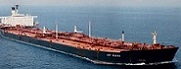
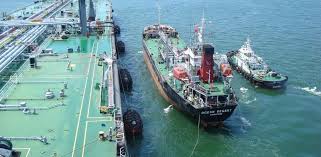
Ships bunkering procedure -Measurement of barge & confirmation to Fuel oil supplier
Bunkering may take place offshore, at anchor or alongside. It may be pumped from a road
tanker, bunker barge, or another tanker or ship. Whatever the provider, the procedures
followed are similar. Bunkering should be considered a high-risk operation, where mistakes
can result in pollution, high financial penalties, or even imprisonment.
The operation of cargo ships Bunkering involved many hazards. Many check items should be complied with to ensure a safe working atmosphere. The observance of the following precautions by the crew is the most common practice that should be complied with. Before the commencement of operation, a fuel oil supplier should submit the document to the vessel's chief engineer before loading that mentions at least the viscosity, density, sulfur content, and volume of FO.
The Supplier should also submit retained samples representing the replenishing FO (which has been signed and sealed by both the vessel side and the Supplier. The local agent should confirm with the fuel oil supplier regarding the movement of the vessel, date and time and place of the Bunkering, fuel oil volume (in metric ton), type of FO, viscosity, density & sulfur content, etc. The local agent should also inform the name of the supplying vessel and the Supplier before arrival at the port.
bunkering in good weather condition
Confirmation to Fuel oil supplier before loading
Chief Engineer should receive Bunker Delivery Note from the Supplier (or the captain of the Barge or the witness) and confirm in writing the viscosity, density, Sulphur content, and volume in good order.
He also needs to confirm with the Supplier or the local agent whether they have any local requirement to preventing oil pollution from being applied to the vessel.
Measurement of barge before loading
The Chief Engineer should have the engineer in charge attend the meeting on the measurement of the Barge the loading and the necessary matters related to the FO loading work, and shall check the following items strictly:
Confirmation of the volume in the document, and confirmation of the seals on valves and ullage holes.
Check of presence/absence of oil to be loaded to other ships on the Barge.
Tank sounding and water check by water ribbon or the like.
Attendance to the calculation of the FO volume using the tank table of the Barge and the adjustment of FO weight by density and temperature.
Confirmation of the loading order by oil type (DO, FO) and pumping rate (including a slow rate of pumping at the start, finish and while changing over tanks)
Confirmation of communication methods between the vessel and Barge (an audio transmission and receiving method, such as the use of intrinsically safe type transceiver), communication methods in an emergency, and emergency shutdown procedures.
Confirming tank capacities
Tank capacities should be monitored during Bunkering by the use of soundings and or
ullages. Sometimes it is easier to use ullages if the bunker tank is large, as this saves time
by not having to clean a large section of the sounding tape after each dip. Ullages should
always be taken using the ullage pipe and reference to the ullage tables for tank contents
used. Never use sounding pipes for ullages unless they have been specifically designed for
this, and the relevant ullage tables are used. Failure to use the correct tables for the
sounding or ullage may result in a quantity miscalculation, and consequently an oil overflow.
Many ships have remote measuring systems that are safe, accurate, and are class approved.
However, the use of these remote systems should not be taken for granted as without
regular maintenance and testing, these pieces of equipment may give false readings
because of line blockages, air pressure failure, or transmitter/electrical problems. Therefore
before Bunkering, the remote readings should be cross-checked with manual soundings.
This cross-check may be included in the ship's planned maintenance routines.
Smaller ships may have tank gauges fitted directly on the bunker tank. These gauges
should be checked and calibrated every docking cycle to ensure that they are fully
operational and accurate. They may be in the form of a pressure gauge read-out, or a
stainless steel tube containing the bunker fluid with an external sight glass using magnetic
indicators as shown in the photographs opposite.
The ship should have certain knowledge as to how full the tanks can be filled safely. It is
often normal to fill bunker tanks to 90% capacity. Some tanks may require less due to
unusual shape and internal configuration which can cause air locks and pockets.
Confirmation just after Bunkering.
Confirmation of dried-up condition of barge: The Chief Engineer shall have the engineer in charge confirm the dried-up condition of the barge tanks (or the shore tank meter), just after pump stopping.
Confirmation of volume just after Bunkering:
After the Bunkering, if a significant difference exists between the vessel side's measurement and that by the Supplier, the Chief Engineer shall prepare and submit a protest letter with the measurement by the vessel side to the shipowner Fuel management office (copy to the Technical Superintendent).
Although it depends upon the total refueling volume, for example, about 2% or more to the expected refueling of 1,000 metric tons and about 5% or more to the expected DO refueling volume of 100 metric tons may be a standard. In this case, the volume measured by the vessel side shall be entered against a remarks column on the bunker receipt, and it is desirable to obtain the suppliers signature on the protest letter.
When the following matters besides shortage volume are generated the Chief Engineer should prepare and submit a STATEMENT OF FACT (FREEFORM) to the shipowner and copy to the Technical Superintendent without hesitation: i) when the Barge did not arrive according to time, ii)
the correspondence of the crew of the Barge is unjust & iii)
additionally, matter thought that Bunkering (Operation) is unjust.
Burning trial
The Chief Engineer shall carry out a burning trial as early as possible after the completion of Bunkering to grasp the qualities of the replenished FO, and shall endeavor to prevent engine troubles caused by the qualities of the FO beforehand. The burning trial shall be carried out according to the following procedures:
When an analysis by the third party is carried out, the burning trial shall be done immediately, talking account of the analysis results.
When an analysis by a third party is carried out, the burning trial shall be carried out at the earliest opportunity.
The burning trial shall be carried out for one or two days, ensuring that FO in the FO settling tanks and service tanks has been replaced.
During the burning trial, great attention shall be given to discharging conditions of sludge and water from purifiers, operational factors such as exhaust temperature, the maximum pressure of the main engine, change of the smoke's color, and so on. Abnormal burning or generation of a large amount of mixed sludge and the like (if any) should be reported immediately to the Technical Superintendent.
Related articles
Acceptance / rejection of fuel in a quality dispute
Accepting fuel oil for ship use needs some careful consideration since poor quality fuel can cause ships main engine fuel system operational problems, such as purifier or filter clogging, fuel pump scoring or failure, severe cylinder liner wear, fuel injector seizure, exhaust valve seat corrosion or blow-past and turbocharger turbine wheel is fouling. Above is just a shortlist of potential problems. Ships chief engineer should apply his best judgment before deciding to accept or reject bunker fuel oil......
Operational guideline during bunkering
Fuel oil bunkering is a critical operation onboard ships that require receiving oil safely into the fuel oil tanks, without causing an overflow of oil. With the cost of bunkers amounting to 50% of the total operating costs of ships, shipowners need to seek ways to monitor and control this vast expenditure continually. Typically, physical custody transfer of bunkers is made thousands of miles away from the contracting parties' offices, with neither buyer nor seller present during actual bunkering operations.
......
Common bunker terms and related guideline
Ships bunkering is generally applied to the storage of petroleum products in designated tanks for ship's main engine propulsion and power generation at sea. Bunkering is a major voyage cost for ship owners to run their business. A prudent shipowner/operator needs a bunkering plan – allowing for the purchase of bunkers at the best price in quantities sufficient for a safe voyage, but also allowing for the maximum carriage of cargo. Refueling of ships is carried out at all major seaports.
........
Ships bunkering guideline- planning, preparation, safety checks & confirmation
Bunkering checklists should be implemented to reduce the risk of negligence and other operational errors. They must be followed in consultation with the chief engineer, as he is normally the designated officer-in-charge of the bunkering operation. Before bunkering, usually, a junior engineering officer takes soundings of bunker tanks and calculates the volume of fuel oil available in every fuel oil tank on the ship. Then a bunker plan is prepared for the distribution of the fuel oil to be received.
Bunkering arrangement and safety factors onboard
When disputes arise over quantity and quality transferred, investigations after delivery are usually inconclusive if the shipboard personnel of the receiving vessel is not correct and or fully informed and trained. Protests, legal fees, management time, loss of goodwill, stress all add on to costs with usually neither party concluding with certainty what transpired onboard......
Bunkering safe procedure and detail guideline for ships
Bunkering may take place offshore, at anchor or alongside. It may be pumped from a road tanker, bunker barge, or another tanker or ship. Whatever the provider, the procedures followed are similar. Bunkering should be considered a high-risk operation, where mistakes can result in pollution, high financial penalties, or even imprisonment......
How to keep bunkering record ?
The consequences of bunker shortage or off-specification bunkers can be very severe. A lower quality bunker supply can lead to ship engine failure, incur loss-time, and additional expenses for refueling. In many parts of the world, greedy bunker suppliers make tricks to supply less.
Both this situation not only increases the financial burden of a shipowner but also damages business reputation. Some critical considerations, therefore, need to be made for a safe bunkering operation.
Precautions prior transferring fuel oil into storage tanks
Fuel oils are loaded through deck fill connections that have sample connections provided to allow the fuel to be sampled as it is taken aboard. HFO is placed in storage tanks fitted with heating coils. In preparation for use, HFO is transferred to the fuel oil settling tanks via FO transfer pumps, which are equipped with a suction strainer. Piping is so arranged that the pumps can convey fuel between storage tanks and the deck connections for offloading. Settling tanks are used to sanction gross water and solids to settle on the bottom.
......
Treatment of waste oil and oily bilge
All modern cargo ship types are now essentially equipped with incinerators to process waste oil, bilge, and sludge generated in ships' machinery spaces and also overboard discharge arrangements under 15 ppm. However, if such onboard disposal is improper or impossible especially when ship transiting through a special area, all waste items should be taken ashore for disposal at a shore receiving facility......
Procedure for oil tankers and how to maintain records
Tankers are specialized vessels that include crude oil, product, chemical, LNG, and other tanker types. Tankers spend considerable time in ballast given the typical one -way nature of the underlying trades. Tankers are selfdischarging and most are equipped with a series of pumps that allow for a fast turnaround in port......
Heating of fuel oil storage tank
Ships fuel oil bunker tanks and waste oil tanks must have some form of tank heating. Normally the heating is by way of steam produced by an oil-fired boiler and passed through coils inside the oil tank. Other ways to heat the fuel tanks are by using thermal oil. It also utilizes an oil fired boiler that heats the thermal oil, which is circulated through coils inside the tank by a pump. Temperature regulation and monitoring can be automatic and self-adjusting but are commonly effected by checking the tank temperature and manually adjusting the heating accordingly......
Fuel oil viscosity control
Fuel viscosity control is a method to control viscosity and temperature of Fuel Oil (FO) for an active fire in diesel engines of motor vessels and generators of oil-fired energy plants. Fuel oil's viscosity heavily depends on the temperature; the higher is the temperature, the lower is the viscosity......
Tanker vessel safety guideline - inert gas system
Vessels carrying cargos that produce hydrocarbon vapors require an inerting solution to eliminate the risk of explosions and fires in cargo tanks ( crude oil tankers, chemical tankers, product tankers, gas carrier, etc.). Inert Gas System is used to keep the oxygen content below 8%, a standard set by the International Maritime Organisation ( IMO )......
Tanker vessel safety guideline - gas freeing procedure
The safest way to gas free an oil tank which is fitted with an inert gas system is to use a fan and vent the tank. Before entry, an O2 meter must be used and the tank must also be checked with an explosimeter. These meters must also be used while in the tank. The sketch shows a diagrammatic view of an explosimeter.....
Precautions prior entering freezing zone - Check items in oil tankers operation
Ocean water freezes just like freshwater, but at lower temperatures. Freshwater freezes at 32 degrees Fahrenheit, but seawater freezes at about 28.4 degrees Fahrenheit, because of the salt in it. Due to the presence of many hostile conditions, any merchant ship, while entering a freezing sea area, significant challenges are being encountered concerning safety and reliability of navigation. Shipmaster should ensure that the following measures have been taken to prevent damage to Vessel, Machinery, Pipelines, and Equipment prior entry into areas with Freezing Conditions......
Tanker vessel safety guideline - how to prevent oil spillage
There exists an inherent risk of oil spillage while handling oil cargo on board an oil tanker. However, good prevention initiatives can go a long way in reducing the risk of oil pollution from ships. In the event of any oil spillage from the ship, it is necessary to ensure that effective preparedness measures are in place to ensure a timely and coordinated response to limit the adverse consequences of pollution incidents involving oil and hazardous and noxious substances (HNS). We have summarized below some fundamental guideline for safe handling of oil cargo.....
Tanker vessel safety guideline - tank cleaning procedures
Tank cleaning is the process of removing hydrocarbon vapors, liquids, or residues from cargo tanks onboard a tanker. Tank cleaning may be required for one or more of the following reasons:
To carry clean ballast, gas-free tanks for internal inspections, repairs, or before entering the dry dock. Also to remove sediments from tank top plating.
Pumproom procedure
A pump room onboard an oil tanker contains the largest concentration of cargo pipelines of any space within the ship and leakage of a volatile product from any part of this system could lead to the rapid generation of a flammable or toxic atmosphere......
Pumproom inspection for tankers
Correct use and setup of pump room(s) ventilation systems are essential to ensure that pump room(s) remain free from explosive or toxic atmospheres. Invariably the system fans are set up to make suction from below the bottom floor plates, i.e., from the bilge area. It gives full and proper circulation of all air in the pumproom to maintain a safe atmosphere......
Crude oil washing for tankers
Crude oil washing (C.O.W.) is a system whereby oil tanks on a tanker are cleaned out between voyages not with water, but with crude oil - the cargo itself. The solvent action of crude oil makes the cleaning process far more effective than when water is used. However, such a technique of washing cargo tanks involves many hazards, and careful consideration will need to be made for safe planning and execution. ......
Oil pollution prevention method
Any misuse of fuel oil can lead to significant claims and jeopardize the safety of the ship. The International Safety Guide for Oil Tankers and Terminals (ISGOTT) makes recommendations for the safe carriage and handling of petroleum cargo, which is seen as a fundamental part of overall Tanker Safety.
General precautions for tankers
Navigating through thunderstorms should be avoided as far as practically possible by changing of course while cargo related activities are carried out which may result in discharge of flammable vapors. If the passing through thunderstorms cannot be avoided, all open cargo oil tank hatches should be closed until the vessel has passed through the thunderstorm The valves in the main vent lines may be temporarily secured in locked position, but must be opened immediately after passing through the thunderstorm........
Tanker equipment and machinery
The Chief Engineer and Chief Officer shall jointly be responsible for the inspection and maintenance of the following cargo oil transfer equipment and machinery before entering port. The Chief Engineer shall prepare and maintain the equipment manuals of machinery and equipment, including critical components related to cargo operations including the procedures for their Emergency operation. All items should be in good operational condition.
ShipsBusiness.com is merely an informational site about various aspects of ships operation,maintenance procedure,
prevention of pollution and many safety guideline. The procedures explained here are only indicative,
not exhaustive in nature and one must always be guided by practices of good seamanship. Site Use and Privacy - Read our privacy policy and site use information. Terms and conditions of use