Tanker management : Operations during laden voyage
The daily operation of oil tankers involved many hazards. There are many check items that should be complied with to ensure a safe working atmosphere.
The Chief Officer shall manage cargo oil and carry out related operations. Observance of following precautions by crew are the most common practice that should be complied with.
Restriction of Smoking, other Burning activities and Naked Lights:
- Smoking is prohibited except in designated smoking areas. Any violations must be reported to the Master. Such guidelines and controls are to be applied to other sort of burning activities such as incense sticks, pipe tobacco, joss sticks, etc.
- Safety Matches or fixed electrical cigarette lighters (car type) will be provided in authorized smoking areas. Safety Matches or fixed electrical cigarette lighters (Car type) must not brought in private cabins out side authorized smoking areas and shall under no circumstances be carried on the tank deck or where petroleum gases may collect.
- During certain special operations, such as Gas freeing or Gas Purging operations, where the presence of inflammable gas can be suspected, then smoking in designated smoking areas is also prohibited.
- The carriage and Usage of Hand Gas Lighters are prohibited onboard Oil Tankers.
Safety Matches are available to use in designated Smoking Area.
- Notices: Portable and Permanent notices prohibiting smoking and the use of naked lights should be displayed conspicuously at the points of access to the ship and at the exits from the accommodation area. Refer to Warning Signs to be Displayed (at Sea/ in Port)
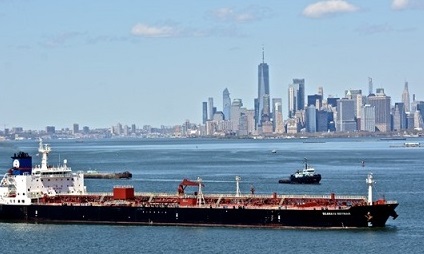
The Master shall designate & post suitable notice for smoking areas under the following conditions:
- While alongside a berth or at an off shore marine facility:
Officers Smoking Room, Crews Smoking Room and Cargo Control Room.
- At sea :
Officers Smoking Room, Crews Smoking Room, Chart Room, Bridge,
Radio Office, Cargo Control Room and Engine Control Room.
Remarks:
- Smoking on the navigational bridge is prohibited in certain port limits, when pilot or port officials are onboard (eg. Australian Waters, Panama Canal, etc)
- The designated smoking areas must be provided with self extinguishing ash trays or filled with water.
- The designated smoking areas must be provided with Automatic Gas Detection system and alarm.
- Portholes and doors leading to the designated smoking areas must be closed at all times.
- Shore facilities regulations must be observed at all times while transit & docked at the facility.
Prohibition of Using Fire except in Designated Areas and Control of Potential Ignition Sources:
At sea, the use of portable stoves and cooking appliances are to be effectively controlled. Ensure the portholes and doors are closed and confirm the safety and the absence of hydrocarbon gas before the use of fire.
Galley precautions: The use of galley stoves or other cooking appliances that employ naked flames are prohibited, while the tanker is at berth.
The use of other portable electrical appliances are to be controlled.
Steam ranges may be used all the time while the vessel is at berth.
In this case, the galley personnel must be instructed and trained in emergency procedures in the safe operation of galley equipment.
Oil / Fat fryers are to be fitted with thermostats to cut-off electrical power and so to prevent accidental fires.
Fire blankets are to be readily available.
Electric heaters in pantries: :
Electric heaters (hot plates, toasters or the like) must be fixed at limited and designated positions only. Never use them if inflammable gas comes into the accommodation or there is a danger that gas is likely to exist.
Standards for Use of Private Electric Appliances and other Portable Electrical Equipment:
Visitors should be cautioned about the restricted use of Non-Approved Type of portable electrical equipment in the Dangerous Area on the Tanker.
Use of Electric appliances in private cabins, other than Entertainment systems, Calculators, Camera equipment and Electric razors are prohibited.
Hand Held UHF / VHF portable transceivers must be of intrinsically safe type.
Other equipment, including, but not limited to Portable radios, Tape recorders, Electronic calculators, Portable telephones or pagers, etc unless of Intrinsically Safe Type, shall not be used on the cargo tank deck, or in areas where flammable gas may be present.
Bank-ready KYB / UBO documentation pack (Bosnia).
No Wiring without Permission: Only fixed receptacles, as initially fitted onboard, are to be used for connecting electric appliances.
Closing Portholes and doors:
With the exception of the designated authorized passage way(s), all portholes and doors
leading to/from the accommodation must be closed in port.
To further minimize the possibility of gas entering the accommodation during cargo
operations, as far as possible the access to accommodation should be limited to the leeward side (opposite to the manifold connection) entrance to accommodation, above the Main / Upper deck level.
Riveted Shoes Prohibited:
Do not use metal riveted shoes and the like on board the vessel.
Use of Body Electrostatic Discharge Plate:
Prior to exiting the accommodation, the Electrostatic Discharge Plate, where fitted, should be touched to discharge any accumulated static electricity. If the handle of an entrance door in grounded, do not put on gloves on going in and out at the door.
Control of personnel in cargo tank deck areas:
Personnel entering the cargo tank deck area, should be suitably clothed with appropriate Personal Protective Equipment (PPE) and should be in all sobriety with respect to the purpose.
Attention to Visitors
- Control of visitors onboard is to be in accordance with the access control and other procedures laid out within the Ship Security Plan.
- They shall be guided by the notices as displayed at the point of entrance
- Only allow authorized visitors onto the vessel upon presentation of photo ID.
- Instruct visitors to adhere to the vessels prohibition to bring matches or lighters onboard, and to comply with the vessels smoking restrictions.
- All visitors shall be escorted from the gangway to the accommodation entrance.
- No visitor is permitted to walk around the main deck/cargo area without escort by vessel personnel.
Cargo control room – A space used for the control of cargo handling operations.
The procedures of loading and unloading, pump control, heating control and monitoring of
the cargo conditions and cargo-handling equipment is carried out and monitored from the
cargo control room.
Precautions when storing Spontaneously Combustible Materials
Materials which may cause spontaneous combustion (saw dust, oily rags, especially oil of vegetable origin, etc). must be stored in a well ventilated area to prevent the accumulation of flammable gases.
They are liable to ignite without the external application of heat, as a result of gradual heating within the material produced by oxidation.
This effect is further enhanced where material is stored in warm areas, e.g. proximity of hot pipes, etc.
Waste rags, saw dust, or any similar absorbent material must not be stowed in the same compartment as oils, paints, etc.
They should not be left lying on decks or equipment and should be stored or disposed effectively.
Certain chemicals, such as those used for boiler treatment are also oxidizing agents and, although carried in diluted form, are capable of spontaneous combustion if permitted to evaporate.
The containers used for storage shall be kept covered and should not be stored together with flammable materials.
Precautions against Sparks from Funnel
At sea, where sparks / burning soot are observed being emitted from the funnel, measures to avoid such sparks falling on deck such as course alteration, where possible, should be considered.
Any special operations such as cargo tank cleaning, purging and gas freeing operations should be ceased and all tank opening closed.
Boiler tubes should be soot blown prior to arrival and after departure from a port. Boiler tubes soot blowing should not be carried out at berth. At sea, the officer of navigational watch should be consulted, prior to such activity, and suitable measures adopted.
Duty deck personnel shall watch for sparks or soot emitting from the funnel.
If sparks from the funnel are observed, the duty engineer or Chief Engineer must be notified immediately.
Pyrophoric Iron Sulphide
In an oxygen-free atmosphere where hydrogen sulphide gas is present (or specifically where the concentration of hydrogen sulphide exceeds that of oxygen), iron oxide (rust) is converted to iron sulphide.
Where the iron sulphide is exposed to air, it is oxidised back to iron oxide and either free sulphur or sulphur dioxide gas is formed. This oxidation can be accompanied by the generation of considerable heat so that individual particles may become incandescent. Rapid exothermic oxidation with incandescence is termed pyrophoric oxidation. Pyrophoric iron sulphide, i.e. iron sulphide capable of pyrophoric oxidation in air, can ignite flammable hydrocarbon gas/air mixtures.
Reference should be made to ISGOTT for full details.
Water And Cargo Oil Measurement
As following the Charterer’s instructions, measure water contained in the cargo and the quantity of cargo oil in each tank during voyage in calm waters.
Every day, during the loaded passage, the Levels (Ullage) and Temperatures (in case of heated cargo) of cargo shall be measured and recorded.
Any unexpected change in such levels shall be reported. This check is to monitor for any increase or decrease and inflow of oil into other tanks due to valve leakage.
Vapor Control
When evolution of cargo vapors is significant in case of gassy / volatile cargoes, confirm complete maintaining of closure of openings. and normal operation of breather valves, and spray water over the deck for cooling as required to prevent vapor loss.
Topping Up Operation:
On the contrary, when the pressure in tanks in negative to such the air, put Inert Gas into tanks to keep a proper internal pressure.
Throughout the loaded passage, until the discharge port, keep continuous record monitoring of the fixed IGS pressure recorder, in addition to wheel house record book.
This record book can provide some pressure control and behavior estimation for further management of the cargo vapor control. Ambient atmospheric temperature and sea water temperature variations can differ.
Cargo Oil Heating:
Heat tanks properly according to the Charterer’s instructions, if any.
The Chief Officer is responsible for monitoring the temperatures and will liaise with the Chief Engineer for the operation of the cargo heating system.
The Chief Engineer is responsible for the correct operation and adjustment / maintenance of the cargo heating system. The boiler cascade tank shall be monitored regularly and alarms where fitted should be in good operational condition.
Chief Engineer also should consider extra fuel Consumption for heating cargo. Prepare a suitable heating plan & maintain/monitor heating record. Consider the following factors when preparing the heating plan
- Adjacent Cargo / Ballast tank temperatures and condition (loaded/empty)
- Ambient air temperature, sea condition & spray on deck, causing cooling effect on heated cargoes
- Condition & technical limitations of steam coils / lines with respect to:
- Steam trap blockages, limitation of machinery & equipment design, and selection of first discharging tanks
- Adjustment of steam valves based on daily cargo tank temperature record
- Steam Main Line Pressure and the number / degree of opening of steam valve to cargo tanks (recorded in “Heating Record”).
Additionally when high cargo temperatures are to be attained consider design & structural limitations and capability of cargo steam heating system. In case of vapor segregation, rapid rise in temperature could lead to high I.G/vapor pressure build up inside tanks (Limitation — IN PORT). Therefore, inform the company / operator promptly in case of such temperature discrepancy.
Line Pressure Test: Conduct a pressure test of cargo lines, COW lines and cargo valves using cargo oil before entering port to check for leak.
Double Hull (D/H) Operation / Oil Tank (COT)
Monitring Records:
Monitoring of Ballast tanks for Hydro carbon / H2S and Leakage / Ingress of Oil is to be carried out after loading- for three continuous days and thereafter, weekly.
Tank Explosion Countermeasures
An explosion in a cargo tank is one of the most serious situations that any Emergency Organisation can be called upon to fight. In the loaded condition there will probably be little that the Emergency Party can achieve, and the saving of life is of paramount importance.
In the ballast condition there may be a greater chance of taking some effective action. The following points must be considered by the Master following such an explosion:
- Possible isolation of the resultant fire by the Emergency Party putting up a "water wall" around the periphery of the fire.
- Arresting the transfer of heat into adjacent accommodation spaces by spraying the poop front bulkheads etc.
- Bringing foam-making equipment into action.
- Evacuation of non-essential personnel.
- Adjusting the vessel's course and speed as necessary to minimise fire spread and reduce further structural damage.
- The release of the fixed gas fire extinguishing medium into the cargo pumproom to inert that space in order to prevent the spread of fire from the cargo tank or hold.
Before releasing the fixed gas extinguishing system in the pumproom the Master must be satisfied that there is no chance of an explosion in the pumproom (an explosimeter reading must not exceed 40% LEL). It must be remembered that electrostatic charge separation may occur at the CO2 nozzles. This produces a possible source of ignition in the form of charged frozen particles of C02 in the pumproom.
Any possible action is to be dictated by circumstances (the ability to provide water on deck etc) but it is the duty of the Master and the Emergency Organisation to do all in their power to combat the situation, even after the non-essential personnel have left the ship.
Tanker facts more
Safe stability guideline for oil tankers Learn basic procedure
Tanker safety precaution Learn basic procedure
Tank cleaning, purging,gas freeing check items
Oil tankers safety guideline for crude oil washing
Tanker vessel safety guideline - inert gas system
Tanker vessel safety guideline - gas freeing procedure
Precautions prior entering freezing zone - Check items in oil tankers operation
Tanker vessel safety guideline
Tanker vessel safety guideline - how to prevent oil spillage
Tanker vessel safety guideline - tank cleaning procedures
Bunkering procedure and related safety checklist
How to ensure safe working atmosphere onboard?
Tanker equipment and machinery
General precautions for tankers
Crude oil washing for tankers
General guidance for oil tankers
General precautions at work for tankers
(Latest edition)
Oil pollution control method
Gas freeing arrangement for oil tanker
Handling guideline for oil cargo
Oil pollution prevention method
Preparation for loading oil cargo
How to prevent spillage of oil cargo
General precautions for oil cargo loading in tankers
General precautions for tankers
General guidances for tank cleaning
General precautions for ballasting procedure
Tanker operation in a laden voyage
Preparation for discharging oil cargo
General precautions for oil cargo discharging
How to ensure safe working area onboard oil tankers
Shipping industry recognizes environmental protection as one of its highest priorities and that every effort should be made to conserve and protect the environment from marine, atmospheric and other forms of pollution.
Our articles are based on various shipboard activities,prevention of pollution,safe operation & maintenance procedure.
Site Use and Privacy - Read our privacy policy and site use information.
Terms and conditions of use
Copyright © shipsbusiness.com All rights reserved.